RETINAL
RETINAL, also called retinaldehyde, is an aldehyde form of vitamin A. This is the name that may appear in a cosmetic ingredient list, and it denotes a defined molecule rather than a plant extract. Retinal occurs in biological systems; one of its forms takes part in the visual cycle.
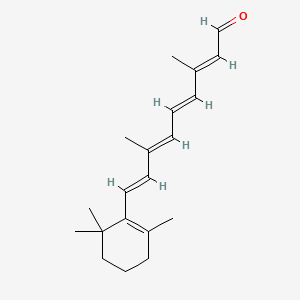
RETINAL: what it is
RETINAL, also called retinaldehyde, is an aldehyde form of vitamin A. This is the name that may appear in a cosmetic ingredient list, and it denotes a defined molecule rather than a plant extract. Retinal occurs in biological systems; one of its forms takes part in the visual cycle.
Retinal is not the same chemical form as retinol or retinoic acid. A clinical paper describes retinaldehyde as a natural precursor of retinoic acid, which helps explain why these related names should not be treated as interchangeable when reading a label or comparing products.
RETINAL: what it does in cosmetics
In cosmetics, RETINAL is classified for skin conditioning. In everyday terms, this means it is used in products intended to help keep skin in good condition, rather than to give the formula an immediate role such as fragrance or colour.
A double-blind clinical trial tested creams containing 0.05% and 0.1% retinaldehyde for three months in 40 volunteers and reported texture improvements in the formulas studied. That finding belongs to those concentrations and those creams; it cannot predict the same effect from every product that lists RETINAL.
Products containing this ingredient
See which products include it and the name used in each composition.