HEXYLENE GLYCOL
Hexylene Glycol is a colourless liquid with a mildly sweet odour that may appear on the ingredient list of serums, lotions, makeup and cleansers. It is also called 2-methyl-2,4-pentanediol; in cosmetics, the English name is usually the one people recognise when checking a label.
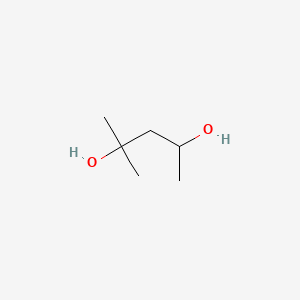
HEXYLENE GLYCOL: what it is
Hexylene Glycol is a colourless liquid with a mildly sweet odour that may appear on the ingredient list of serums, lotions, makeup and cleansers. It is also called 2-methyl-2,4-pentanediol; in cosmetics, the English name is usually the one people recognise when checking a label.
Although the compound has been identified as an aroma component in some apples, industrial Hexylene Glycol is made through a chemical route. Production starts from acetone-derived material and includes a hydrogenation step. Its presence on a label therefore does not mean that the product contains apple extract or has a plant-derived origin.
HEXYLENE GLYCOL: what it does in cosmetics
In cosmetics, Hexylene Glycol is mainly used as a solvent: it helps other components dissolve and disperse through the mixture. It can also help form emulsions, which bring water and oily phases together, and support skin conditioning, meaning the finished product may leave skin feeling softer to the touch.
A safety assessment that collected data on glycols in cosmetics described uses including solvent and emulsifier, and examined irritation and safety rather than improvement of wrinkles, dark spots or acne. Seeing Hexylene Glycol on a label therefore points to a formulation and sensory role; it is not, by itself, a skin-treatment claim.
HEXYLENE GLYCOL: conditions and care
In rabbit studies, undiluted Hexylene Glycol caused severe eye irritation, while a 25% aqueous solution did not produce that sign in the same model. This result does not predict a reaction to a finished cosmetic, but it does not support treating the undiluted ingredient as harmless to the eyes.
Products containing this ingredient
See which products include it and the name used in each composition.