CALCIUM CARBONATE
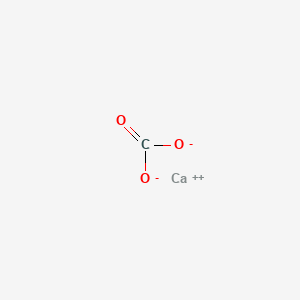
Calcium carbonate, listed as CALCIUM CARBONATE on an ingredient label, is a white powder made of calcium and carbonate. It occurs in limestone rocks and in mineral forms such as calcite, aragonite, and vaterite, so its white appearance and solid texture are part of what the material is rather than an effect on skin.
CALCIUM CARBONATE: what it is
Calcium carbonate, listed as CALCIUM CARBONATE on an ingredient label, is a white powder made of calcium and carbonate. It occurs in limestone rocks and in mineral forms such as calcite, aragonite, and vaterite, so its white appearance and solid texture are part of what the material is rather than an effect on skin.
The raw material may come from ground limestone or from an industrial precipitation step. Those routes yield materials with different handling characteristics, and an ingredient list does not reveal which one was selected. It is also distinct from the many calcium salts used for nutritional or medicinal purposes: in cosmetics, the relevant point is how this powder behaves within the product.
CALCIUM CARBONATE: what it does in cosmetics
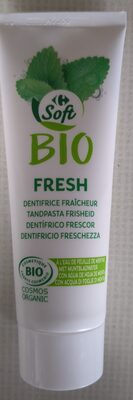
In cosmetics, calcium carbonate can work as an abrasive, bulking agent, pH buffer, and opacifier. In toothpaste, its abrasive action can support mechanical cleaning of tooth surfaces; in powders and other formulas, it can add body and make the mixture less transparent, contributing to a whiter or more opaque appearance.
These are physical formulation roles that depend on the complete product and particle size; they do not mean the ingredient treats a skin or dental condition. The Cosmetic Ingredient Review assessment covers carbonate salts used in cosmetics and concluded they were safe under the assessed practices and concentrations when formulated to be non-irritating. That assessment does not show that calcium carbonate alone treats acne, dark spots, wrinkles, or disease.
CALCIUM CARBONATE: conditions and care
When used as the white colorant CI 77220 in the European Union, calcium carbonate must meet the purity criteria set for E 170. This requirement concerns the quality of the raw material used by the manufacturer.
Restrictions and conditions of use
Products containing this ingredient
See which products include it and the name used in each composition.